

Battery: technical concepts of electric cars
Although we may not believe it, electric cars have been around for a long time; in fact, in the first decade of the 20th century, this type of car represented a third of the vehicle fleet. After being put aside for almost a century, electric cars are now once again an alternative to internal combustion cars. Thanks to batteries with greater capacity and great technological advances, we can currently see electric cars in the center of any city.
However, after so long using only diesel and gasoline cars, we no longer know what concepts and factors make one electric car better or worse than another. In this way, in today's article we will talk about some basic concepts that we must know if we want to be able to talk about electric cars with knowledgeable people.
The battery of electric cars
We must understand the electric battery as a warehouse in which all chemical energy is stored. Inside the battery they can make one or more electrochemical cells that convert this chemical energy into electrical current. Although there are different types, the most used battery currently in the automotive sector is lithium ion batteries.
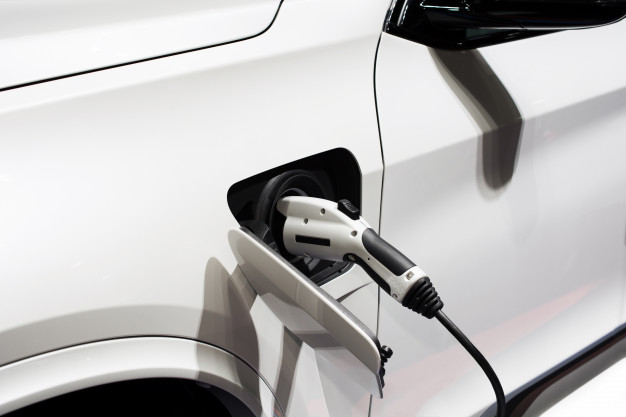
The capacity of a battery will be measured according to the charge that can be stored in it, this capacity can be measured in ampere-hours (Ah). Thus, if a battery has a charging capacity of 1 ampere-hour, it means that it can supply a current of 1 ampere for 1 hour.
The density of a battery is the ratio of mass per unit volume of electrolyte. So that we understand it better, a great energy density will allow us to accumulate much more charge per unit of weight and volume. In this way, the higher the density of the battery, the less weight and size the battery can have.
On the other hand, the kWh is understood as the energy capacity that a battery can transfer, either by supplying it to the motor or receiving it from a charger. In this way, we must understand that the amount of energy that a battery is capable of supplying depends directly on its capacity and voltage.
The kWh measurement also serves to express the charging capacity in relation to the speed at which the battery is charged. As an example, if a battery has 90 kWh, it will take 75 minutes to recharge the battery from 0% to 100%.
Finally, it should be noted that kWh serves to express the consumption, capacity and maximum time at which the battery can be changed in an electric car model. Always keeping in mind that charging time may vary depending on the amperage and voltage of the supply.


